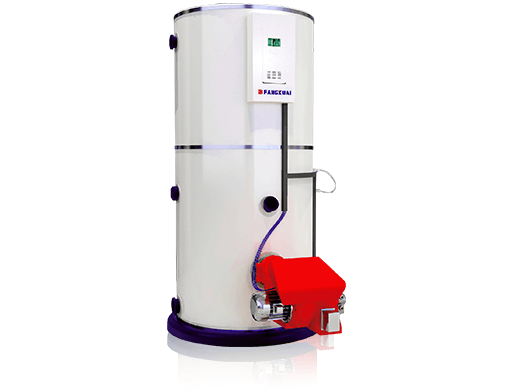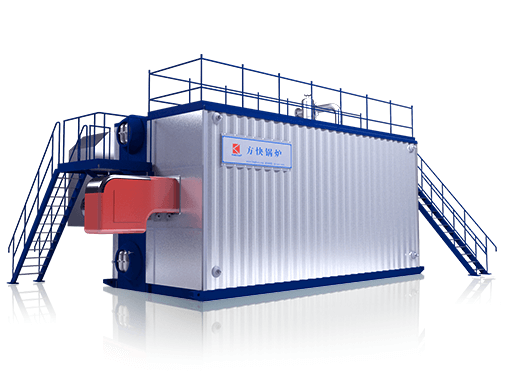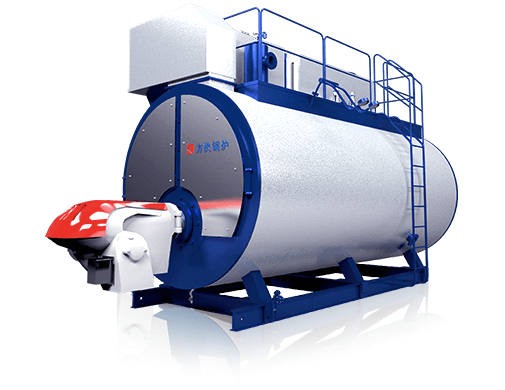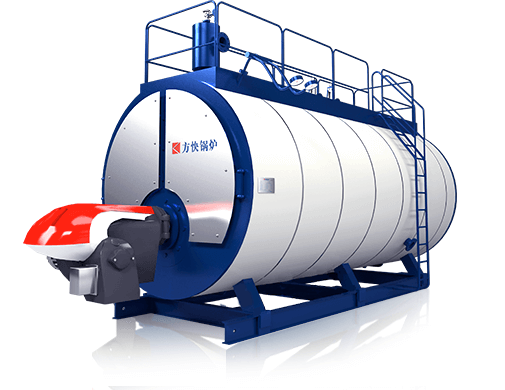


Industrial boilers are one of the necessary equipment in many industrial industries. The high-temperature steam output by the boiler and the heat it brings can provide a source of power for the industrialized process. Zhengzhou Fangkuai Boiler Factory, as a company with many years of cooperation experience in the field of industrial boilers, has a lot of knowledge about boiler operation, maintenance, and maintenance. Today, I will tell you how much damage is caused by scaling to industrial boilers.
First of all, after the formation of scale inside the industrial boiler, the heat transfer performance of the heating surface becomes poor, and the heat released when the fuel is burned cannot be quickly transferred to the boiler water; therefore, a large amount of heat is taken away by the flue gas, causing the exhaust gas temperature to rise and increase The heat loss of exhaust gas reduces the thermal efficiency of the boiler.
Secondly, it may cause overheating and low strength of the metal, endangering safety. The steel used for the heating surface of industrial boilers is generally carbon steel. During use, the metal wall temperature is allowed to be below 450 ℃; when the boiler is in normal operation, the metal wall temperature is generally below 280 ℃. When there is no scale on the heating surface of the boiler, the metal can quickly transfer heat to the water after being heated. At this time, the temperature difference between the two is about 30 ℃. However, if scale accumulates on the heated surface, the temperature difference between the two will increase. For example: when the heating surface of a boiler with a working pressure of 1.25Mpa has 1 mm thick scale (mixed scale), the temperature difference between the metal wall and the boiler water will reach about 200 ℃; when the scale reaches 3 mm, the metal wall temperature will rise to 580 ℃, far exceeds the allowable temperature of steel. At this time, the tensile strength of the steel will be reduced, and the pressure components of the boiler will overheat, bulge, deform, leak, and even explode under the action of internal pressure. The measured data shows that the metal wall temperature increases as the scale thickness increases. The thicker the scale, the higher the metal wall temperature, and the greater the probability of accidents.
The water circulation of industrial boilers has two forms: natural water circulation and forced water circulation. The natural water cycle is a water cycle that relies on the pressure difference caused by the difference in the specific gravity of soda and water in the riser pipe and the down pipe. Forced water circulation depends on the mechanical power of the water pump to force the circulation. Regardless of which form of water circulation, it is designed and calculated, which means that there is enough circulation cross-sectional area. When scale builds up on the inner wall of the furnace tube, the circulation area in the tube is reduced, the flow resistance increases, the normal water circulation is destroyed, and the metal wall temperature toward the fire surface rises. When the pipeline is blocked by scale, the water circulation is completely stopped, and the metal wall temperature is higher, and pipe burst accidents will occur for a long time.
Once the industrial boiler scales, it must be removed quickly, so as to ensure the safe and economical operation of the boiler. The later the scale builds up, the more medicine is consumed, and the more money is invested. For example, if the average fouling of a 1t/h boiler is 3 mm, 0.5 tons of chemicals are required to remove the fouling once. After increasing according to the different boiler tonnage, the required reagent will increase by one-third, and the investment capital will increase accordingly.
The service life of general industrial boilers can run continuously for about 20 years under normal use conditions. However, most of the boilers of the current use units have not reached this life. There are many reasons for this, one of which is the influence of scale. The drum has a bulge, and after digging and repairing it, it should be properly reduced in pressure to ensure safety. In this way, for units that require high steam pressure, they have to replace a new boiler.

FANGKUAI Boiler is excited to announce our participation in the 140th China Import and Export Fair (Canton Fair 2026), which will be held from October 15th to 19th, 2026 at the China Import and Export Fair Complex in Guangzhou, Guangdong, China.
As a professional industrial boiler manufacturer, FANGKUAI Boiler will present our latest boiler technologies and customized heating solutions at Booth No. 6.1B03. We sincerely invite global customers, distributors, and industry partners to visit our booth and explore potential cooperation opportunities.
At Canton Fair 2026, FANGKUAI Boiler will showcase a variety of efficient and reliable boiler solutions designed for different industrial applications. Our products are developed to provide stable steam supply, energy efficiency, and flexible fuel options for customers worldwide.
Visitors can learn more about our main boiler products, including:
FANGKUAI Boiler provides heating solutions for various industries, including food processing, textile, pharmaceutical, chemical, manufacturing, and commercial heating applications. Our professional team can help customers select suitable boiler systems based on fuel type, steam demand, operating pressure, and project requirements.
The Canton Fair is an important international platform connecting manufacturers, buyers, and industry professionals from around the world. During the exhibition, visitors can communicate directly with the FANGKUAI Boiler team and discuss their specific heating and steam requirements.
Our experts will provide professional consultation on:
Whether you are planning a new boiler installation, replacing an existing heating system, or searching for a reliable boiler supplier, FANGKUAI Boiler is ready to provide professional support and suitable solutions.
With extensive experience in boiler manufacturing and international markets, FANGKUAI Boiler focuses on delivering safe, efficient, and environmentally friendly boiler equipment for customers around the world.
Through continuous innovation and cooperation with global partners, FANGKUAI Boiler aims to provide advanced heating technologies and professional services for different industrial sectors.
The 140th Canton Fair 2026 will be a great opportunity to explore new technologies, exchange industry insights, and develop future business partnerships.
We warmly welcome you to visit FANGKUAI Boiler:
Our team looks forward to meeting you at Canton Fair 2026 and discussing how FANGKUAI Boiler can support your industrial steam and heating needs.
See you at Canton Fair 2026!


September 24–27, 2026 | Booth 4A27 | Cairo International Conference Center (CICC), Egypt
Dabonn Energy is excited to announce its participation in EGYPT STITCH & TEX EXPO 2026, one of the leading textile machinery and technology exhibitions in North Africa and the Middle East. The exhibition will take place from September 24 to 27, 2026, at the Cairo International Conference Center (CICC) in Nasr City, Cairo, Egypt.
Visitors are warmly invited to Booth 4A27, where Dabonn Energy will present its latest industrial boiler technologies and energy-efficient steam solutions designed specifically for the textile industry.
Steam plays a critical role throughout textile manufacturing, including dyeing, printing, bleaching, washing, drying, and finishing. A reliable boiler system directly affects production efficiency, energy consumption, and operating costs.
At EGYPT STITCH & TEX EXPO 2026, Dabonn Energy will showcase a range of industrial boiler solutions engineered to meet the demanding requirements of textile factories, including:
Our engineering team will provide professional consultation to help visitors select the most suitable boiler system based on production capacity, fuel availability, steam demand, and energy-saving goals.
As textile manufacturers continue to pursue higher efficiency and lower operating costs, energy-saving boiler systems have become increasingly important.
Dabonn Energy integrates advanced combustion technology, intelligent control systems, and optimized heat transfer designs into every boiler solution. These technologies help customers achieve:
Whether powered by natural gas or biomass fuels, our industrial boilers are designed to deliver dependable performance while supporting sustainable manufacturing.
During the exhibition, visitors will have the opportunity to meet directly with Dabonn Energy's technical and sales specialists to discuss a wide range of industrial heating solutions.
Topics include:
Our team will also share successful application cases from textile manufacturers across different countries and explain how efficient boiler systems can improve productivity while reducing energy costs.
Egypt continues to strengthen its position as an important textile manufacturing hub in Africa and the Middle East. With increasing investment in textile production, the demand for reliable and energy-efficient steam generation equipment is also growing.
By participating in EGYPT STITCH & TEX EXPO 2026, Dabonn Energy looks forward to establishing new partnerships with textile manufacturers, engineering companies, distributors, and industrial investors throughout Egypt, North Africa, and neighboring regions.
We remain committed to delivering high-quality industrial boiler equipment backed by professional engineering support and comprehensive after-sales service.
We sincerely invite all visitors attending EGYPT STITCH & TEX EXPO 2026 to stop by Booth 4A27 and explore how Dabonn Energy can help improve the efficiency and sustainability of your textile production.
Exhibition: EGYPT STITCH & TEX EXPO 2026
Venue: Cairo International Conference Center (CICC), Nasr City, Cairo, Egypt
Date: September 24–27, 2026
Booth Number: 4A27
We look forward to meeting customers and partners from around the world and discussing innovative industrial boiler solutions for the future of the textile industry.


Recently, Zhengzhou Fangkuai Boiler Sales Co., Ltd. traveled to Dhaka, the capital of Bangladesh, to attend the Bangladesh International Textile, Knitwear & Garment Industry Exhibition (BTKG 2026). It showcased industrial thermal equipment and system solutions adapted to the whole process of textile printing and dyeing, actively expanding the South Asian market.
Bangladesh is an important global producer and exporter of textiles and garments. As a pillar local industry, the textile sector has long-term and strong demand for high-efficiency, stable and energy-saving industrial boilers and thermal equipment, with broad market potential. This exhibition participation is an important measure for Zhengzhou Fangkuai Boiler Sales Co., Ltd. to advance its internationalization strategy and further explore overseas markets.

Relying on its technological accumulation and manufacturing advantages in the field of thermal energy equipment, the company provides targeted thermal energy solutions for local textile, printing and dyeing, garment manufacturing and other industries, helping enterprises improve production efficiency and reduce operating costs. In the future, Zhengzhou Fangkuai Boiler Sales Co., Ltd. will continue to focus on overseas market demands, continuously optimize its product and service system, facilitate the high-quality development of the global textile industry with professional and reliable products, and steadily enhance the brand’s competitiveness and influence in overseas markets.