
If you're searching for "gas boiler cost," you've likely realized that getting a clear, upfront number isn't as simple as checking a price tag. The final price of an industrial or commercial gas boiler is a puzzle, where the piece labeled "equipment" is just one part of the bigger picture. Understanding the full scope of what influences this cost is the first step to making an investment that delivers value for years, not just the lowest initial price.
This guide will dismantle the term "gas boiler cost" and rebuild it with clarity. We'll explore the different types of boilers, break down every factor that impacts your final quote, provide transparent price ranges, and outline how to choose a partner, not just a supplier.

When professionals ask about cost, they're really asking about Total Cost of Ownership (TCO). This includes:
Capital Expenditure (CAPEX): The upfront cost of the boiler unit, accessories, shipping, installation, and commissioning.
Operational Expenditure (OPEX): The ongoing costs of fuel (natural gas or propane), maintenance, water treatment, and potential repairs.
A savvy buyer evaluates both. A slightly higher CAPEX for a supremely efficient model can lead to dramatically lower OPEX, paying for itself over time. Let's start by understanding what you're buying.
The type of boiler you need sets the baseline for cost.
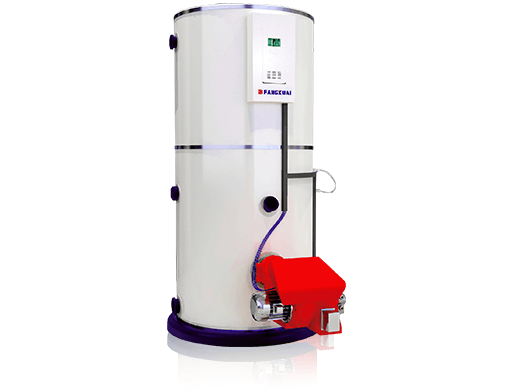
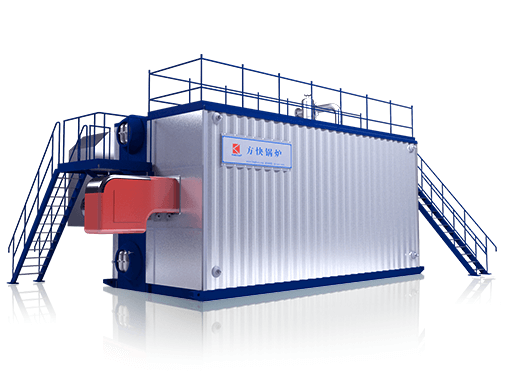
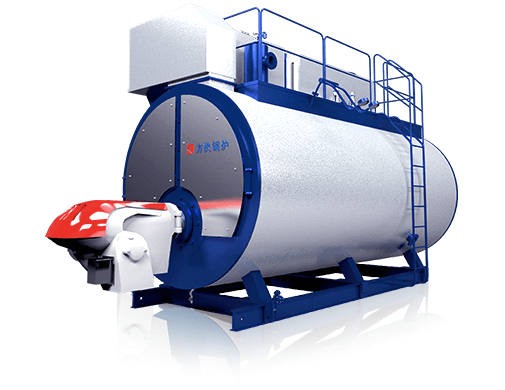
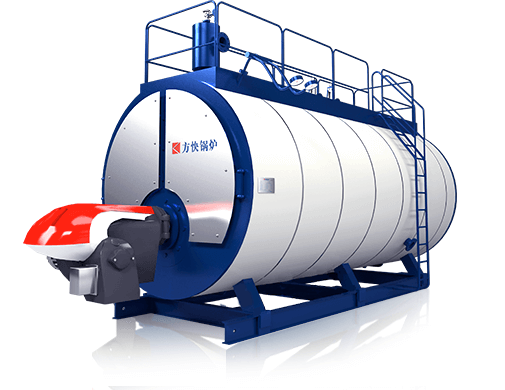
Fire-Tube Boilers: Often called "shell boilers," these are workhorses known for their durability and relatively simpler design. Hot gases pass through tubes surrounded by water. They typically have a lower initial equipment cost, are compact, and are well-suited for lower to medium pressure and steam demands. Ideal for many manufacturing plants, laundries, and facilities with steady loads.
Water-Tube Boilers: Here, water flows inside the tubes, and hot gases surround them. This design allows for higher pressures, faster steam generation, and greater efficiency in larger capacities. The more complex engineering and materials result in a higher initial gas boiler cost, but they are often the choice for high-demand power plants, large processing facilities, and applications requiring high-pressure steam.
Condensing vs. Non-Condensing Boilers: This is a critical modern distinction.
Condensing Boilers: These high-efficiency units capture latent heat from the exhaust flue gases that would otherwise be wasted, achieving thermal efficiencies often above 95%. They require specialized corrosion-resistant materials (like stainless steel) for the heat exchangers, which increases the industrial gas boiler price. However, the fuel savings are substantial.
Non-Condensing Boilers: Traditional models with lower efficiencies (typically 80-85%). They have a lower purchase price but waste more energy up the stack, leading to higher long-term fuel costs.

Why does one quote for a "2-ton gas boiler" come in at $20,000 and another at $35,000? Here are the deciding variables:
Measured in horsepower (HP), pounds per hour (lb/hr), or kilowatts (kW), this is the non-negotiable starting point. A 500,000 BTU/hr boiler will cost less than a 5,000,000 BTU/hr unit. Undersizing kills productivity; oversizing wastes capital and fuel. An accurate heat load calculation is essential.
A boiler built for 150 PSI is engineered differently than one built for 300 PSI. Higher pressure and temperature ratings require thicker metals, more robust welding, and heavier-duty components, all of which directly increase the commercial gas boiler cost.
Tier 1 International Brands: Established North American or European manufacturers command a premium. You're paying for extensive R&D, global service networks, proven reliability, and stringent quality control.
Quality International Suppliers: Reputable suppliers from industrial hubs offer a strong balance of quality and value, often manufacturing to international standards.
Standards Matter: Compliance with ASME Section I (Power Boilers) or EN 12952/12953 is not optional for safety and insurance. Boilers with these certifications involve higher material and testing costs but are essential for legal operation. Always verify certifications.
The "devil is in the details" of the quote's fine print.
Burner: A standard on/off burner vs. a fully modulating, low-NOx burner can be a difference of thousands of dollars. The latter saves fuel and meets strict emission codes.
Control System: A basic relay panel vs. a full-color touchscreen PLC with remote IoT monitoring and data logging.
Heat Exchanger Material: Standard carbon steel vs. stainless steel sections (for condensing models) or special alloys for harsh conditions.
Pumps, Valves, & Accessories: The quality of these ancillary items (e.g., feedwater pumps, blowdown valves) affects longevity and price.
Investing in intelligence upfront pays back daily.
Economizers: Add-on heat exchangers that pre-heat feedwater using exhaust heat, boosting efficiency by 3-5%.
Advanced Controls: Lead-lag systems for multiple boilers, O2 trim controls to optimize combustion, and full BMS integration.
Built-in Diagnostics: Systems that predict maintenance needs and prevent downtime.

The following are FOB (Free On Board) price estimates for the boiler unit itself. Installation, shipping, taxes, and commissioning are extra.
| Boiler Type & Specification | Estimated FOB Price Range | Typical Application |
|---|---|---|
| Standard Fire-Tube, Non-Condensing 1-2 million BTU/hr, 100-150 PSI, basic controls |
$15,000 - $30,000 | Small factories, hotels, small district heating |
| High-Efficiency Fire-Tube, Condensing 1-2 million BTU/hr, stainless steel heat exchanger, modulating burner |
$30,000 - $50,000 | Facilities with high fuel costs, seeking sustainability |
| Standard Water-Tube 10,000 - 50,000 lb/hr, 200-300 PSI |
$50,000 - $150,000+ | Large industrial plants, refineries, power generation |
| Advanced Package Boiler Fully automated, skid-mounted, turnkey design |
Highly Variable (+30-50% premium) | Projects requiring minimal field labor and fast startup |
The total installed gas boiler cost can be 1.5 to 3 times the FOB equipment price. Budget for:
Shipping & Logistics: Especially for oversized units.
Installation Labor: Mechanical, electrical, and piping work.
Civil Work: New foundation, boiler room modifications.
Fuel Connection: Gas line upgrades or propane tank setup.
Venting/Flue System: Particularly complex for condensing boilers.
Water Treatment System: Crucial for boiler longevity and efficiency.
Permits & Inspections: Local jurisdictional fees.
Start-up & Commissioning: Professional tuning for optimal operation.

Audit Your Needs First: Work with an engineer to define your exact steam/hot water demand, required pressure, and future expansion plans.
Get Detailed, Like-for-Like Quotes: Insist on proposals that specify every component by brand and model, efficiency ratings (AFUE or thermal), and included warranties. A vague quote leads to costly change orders.
Prioritize Lifecycle Cost, Not Just Price: Use a simple payback analysis: (Price of Efficient Model - Price of Basic Model) / Annual Fuel Savings. An efficient boiler often pays back the premium in 2-5 years.
Vet the Supplier Thoroughly: Ask for project references from similar industries. Research their after-sales service: Do they have local technicians? What is their spare parts availability?
Plan for the Long Term: Inquire about recommended maintenance schedules and the expected service life of the unit.

The question behind "gas boiler cost" is really about value, risk, and performance. The cheapest option today can become the most expensive over ten years through wasted fuel, unscheduled downtime, and repair headaches.
By understanding the factors outlined in this guide, you transform from a price-shopper into a value-driven buyer. You'll be equipped to evaluate quotes critically, ask the right technical questions, and select a system that delivers reliable, cost-effective steam or hot water for your operation's lifetime.
Need a Transparent Quote Tailored to Your Project?
We specialize in providing complete gas boiler solutions for industrial and commercial applications. Our engineers will work with you to specify the right boiler—whether fire-tube or water-tube, condensing or standard—based on your precise operational and financial goals.
Contact our engineering team today for a detailed, no-obligation consultation and a comprehensive quote that separates equipment cost from installation, so you know exactly what you're investing in. Let's calculate the true cost of ownership for your facility.

FANGKUAI Boiler is excited to announce its participation in the 2026 Indonesia International Boiler Exhibition (EXPO BOILER 2026), which will take place from November 3 to 5, 2026, at JIEXPO Jakarta International Expo, Indonesia.
As a professional industrial boiler manufacturer, FANGKUAI Boiler warmly welcomes customers, engineering companies, distributors, and industry professionals to visit Booth A3-74 to explore industrial boiler technologies and discuss customized heating solutions.
EXPO BOILER is an international exhibition dedicated to boiler technology, industrial heating systems, and related equipment. The event provides an opportunity for manufacturers, suppliers, and industrial users to exchange technical knowledge and explore business cooperation.
| Exhibition Name | EXPO BOILER 2026 |
|---|---|
| Exhibitor | FANGKUAI Boiler |
| Exhibition Date | November 3–5, 2026 |
| Location | JIEXPO Jakarta International Expo, Indonesia |
| Booth Number | A3-74 |
Industrial steam and heating systems play an essential role in manufacturing operations. Selecting the appropriate boiler technology can help businesses improve energy utilization, maintain stable production, and manage operating costs.
During EXPO BOILER 2026, FANGKUAI Boiler will introduce its industrial boiler solutions and share technical expertise with visitors from different industries.
Our main product range includes:

Indonesia has a diverse industrial sector, including food processing, textiles, palm oil production, chemicals, and other manufacturing industries that require dependable steam and thermal energy.
FANGKUAI Boiler aims to support industrial customers by providing boiler equipment and technical solutions tailored to different production requirements.
At the exhibition, our technical representatives will be available to discuss important project considerations, including:
We welcome visitors to share their project specifications with our team so that we can discuss suitable equipment configurations and potential cooperation opportunities.
EXPO BOILER 2026 is an excellent opportunity to meet our team face-to-face, learn more about our industrial boiler products, and exchange ideas on industrial heating applications.
Whether you are looking for a new industrial steam boiler, considering an equipment upgrade, or searching for a long-term boiler manufacturing partner, we invite you to visit our booth in Jakarta.
Our team will be pleased to discuss your requirements and provide information about our products and technical services.
We sincerely invite our customers and partners from Indonesia and across Southeast Asia to meet us at EXPO BOILER 2026.
Exhibition: EXPO BOILER 2026
Date: November 3–5, 2026
Venue: JIEXPO Jakarta International Expo, Indonesia
Booth: A3-74
To arrange a meeting or discuss your industrial boiler requirements before the exhibition, please contact FANGKUAI Boiler through our official website.
We look forward to welcoming you at Booth A3-74 in Jakarta, Indonesia!


FANGKUAI Boiler is excited to announce our participation in the 140th China Import and Export Fair (Canton Fair 2026), which will be held from October 15th to 19th, 2026 at the China Import and Export Fair Complex in Guangzhou, Guangdong, China.
As a professional industrial boiler manufacturer, FANGKUAI Boiler will present our latest boiler technologies and customized heating solutions at Booth No. 6.1B03. We sincerely invite global customers, distributors, and industry partners to visit our booth and explore potential cooperation opportunities.
At Canton Fair 2026, FANGKUAI Boiler will showcase a variety of efficient and reliable boiler solutions designed for different industrial applications. Our products are developed to provide stable steam supply, energy efficiency, and flexible fuel options for customers worldwide.
Visitors can learn more about our main boiler products, including:
FANGKUAI Boiler provides heating solutions for various industries, including food processing, textile, pharmaceutical, chemical, manufacturing, and commercial heating applications. Our professional team can help customers select suitable boiler systems based on fuel type, steam demand, operating pressure, and project requirements.
The Canton Fair is an important international platform connecting manufacturers, buyers, and industry professionals from around the world. During the exhibition, visitors can communicate directly with the FANGKUAI Boiler team and discuss their specific heating and steam requirements.
Our experts will provide professional consultation on:
Whether you are planning a new boiler installation, replacing an existing heating system, or searching for a reliable boiler supplier, FANGKUAI Boiler is ready to provide professional support and suitable solutions.
With extensive experience in boiler manufacturing and international markets, FANGKUAI Boiler focuses on delivering safe, efficient, and environmentally friendly boiler equipment for customers around the world.
Through continuous innovation and cooperation with global partners, FANGKUAI Boiler aims to provide advanced heating technologies and professional services for different industrial sectors.
The 140th Canton Fair 2026 will be a great opportunity to explore new technologies, exchange industry insights, and develop future business partnerships.
We warmly welcome you to visit FANGKUAI Boiler:
Our team looks forward to meeting you at Canton Fair 2026 and discussing how FANGKUAI Boiler can support your industrial steam and heating needs.
See you at Canton Fair 2026!


September 24–27, 2026 | Booth 4A27 | Cairo International Conference Center (CICC), Egypt
Dabonn Energy is excited to announce its participation in EGYPT STITCH & TEX EXPO 2026, one of the leading textile machinery and technology exhibitions in North Africa and the Middle East. The exhibition will take place from September 24 to 27, 2026, at the Cairo International Conference Center (CICC) in Nasr City, Cairo, Egypt.
Visitors are warmly invited to Booth 4A27, where Dabonn Energy will present its latest industrial boiler technologies and energy-efficient steam solutions designed specifically for the textile industry.
Steam plays a critical role throughout textile manufacturing, including dyeing, printing, bleaching, washing, drying, and finishing. A reliable boiler system directly affects production efficiency, energy consumption, and operating costs.
At EGYPT STITCH & TEX EXPO 2026, Dabonn Energy will showcase a range of industrial boiler solutions engineered to meet the demanding requirements of textile factories, including:
Our engineering team will provide professional consultation to help visitors select the most suitable boiler system based on production capacity, fuel availability, steam demand, and energy-saving goals.
As textile manufacturers continue to pursue higher efficiency and lower operating costs, energy-saving boiler systems have become increasingly important.
Dabonn Energy integrates advanced combustion technology, intelligent control systems, and optimized heat transfer designs into every boiler solution. These technologies help customers achieve:
Whether powered by natural gas or biomass fuels, our industrial boilers are designed to deliver dependable performance while supporting sustainable manufacturing.
During the exhibition, visitors will have the opportunity to meet directly with Dabonn Energy's technical and sales specialists to discuss a wide range of industrial heating solutions.
Topics include:
Our team will also share successful application cases from textile manufacturers across different countries and explain how efficient boiler systems can improve productivity while reducing energy costs.
Egypt continues to strengthen its position as an important textile manufacturing hub in Africa and the Middle East. With increasing investment in textile production, the demand for reliable and energy-efficient steam generation equipment is also growing.
By participating in EGYPT STITCH & TEX EXPO 2026, Dabonn Energy looks forward to establishing new partnerships with textile manufacturers, engineering companies, distributors, and industrial investors throughout Egypt, North Africa, and neighboring regions.
We remain committed to delivering high-quality industrial boiler equipment backed by professional engineering support and comprehensive after-sales service.
We sincerely invite all visitors attending EGYPT STITCH & TEX EXPO 2026 to stop by Booth 4A27 and explore how Dabonn Energy can help improve the efficiency and sustainability of your textile production.
Exhibition: EGYPT STITCH & TEX EXPO 2026
Venue: Cairo International Conference Center (CICC), Nasr City, Cairo, Egypt
Date: September 24–27, 2026
Booth Number: 4A27
We look forward to meeting customers and partners from around the world and discussing innovative industrial boiler solutions for the future of the textile industry.